
Satellite
After five years of intense study, I received degrees in Physics, Mathematics and Business Administration. Then all of a sudden, I had nothing to do! I socialized with another Coe physics graduate, Bill Whelply. Bill was going to the University of Iowa and working in the Cosmic Ray Laboratory. He mentioned that the University of Iowa needed physicists for their Cosmic Ray Laboratory to work on building satellites. He arranged an interview for me to meet with James Van Allen, famous for his work on the Van Allen Radiation Belts and the head of the physics department. When I met Van Allen and he learned that I was a recent graduate in Physics from Coe, he immediately invited me to join his team in the Cosmic Ray Lab to work on satellite projects. This was the moment when I truly understood the significance of a physics degree. Van Allen welcomed me into the graduate school and offered me a stipend to start working in the Lab the very next day.
When I joined the Cosmic Ray Laboratory and was assigned the desk space previously used by George Ludwick, it blew my mind. George had been instrumental in building the Explorer 1 Satellite, America’s first successful satellite. George had recently graduated and taken a job at NASA headquarters. So, it was an incredible honor to follow in the footsteps of such a pioneering scientist. Imagine going from being without a plan to suddenly working the next day alongside renowned scientists, making history. The Cosmic Ray Laboratory was highly respected, and it was a privilege to work there. I contributed to projects involving satellites like Voyager, OGO Transit, and Telstar. Inside my desk, George Ludwick had left numerous photos from his work on the Explorer 1 satellite, and I have shared them in the “Satellite” section. It was a true honor to receive an invitation from Jim Van Allen to join this world-class team of space scientists in their mission to explore space.
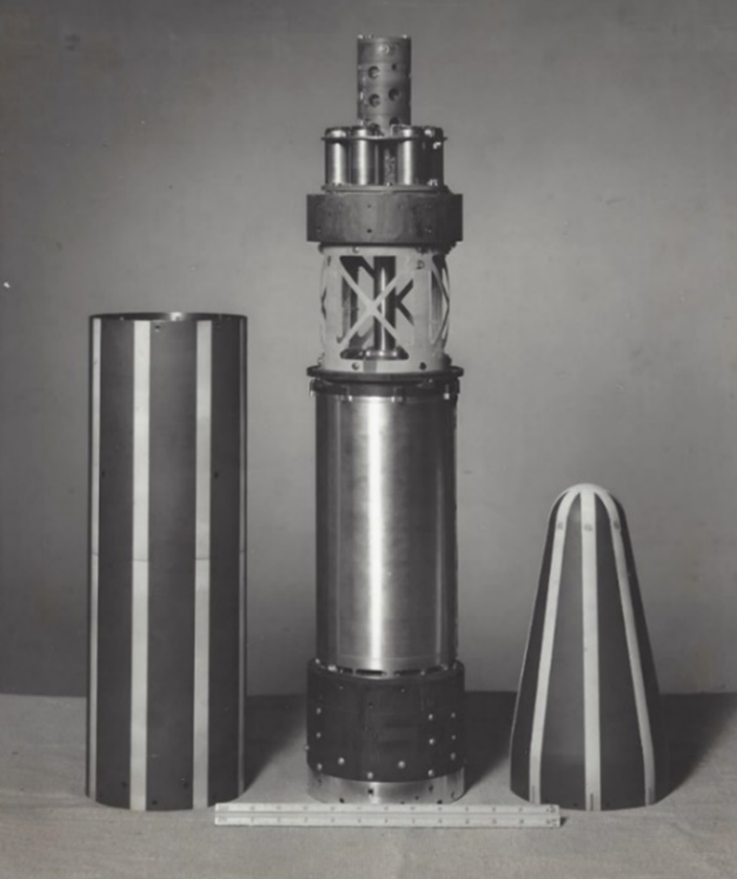
EXPLORER 1 FIRST USA SATELLITE DISCOVERED THJE VAN ALLEN RADIATION BELTS USING THE GEIGER COUNTER SHOWN IN THELIGHT GRAY COLORED CAGE.
GEORGE LUDWIN HISTORIC PHOTO FOUND IN MY DESK AT COSMIC RAY LAB
PHOTO 1
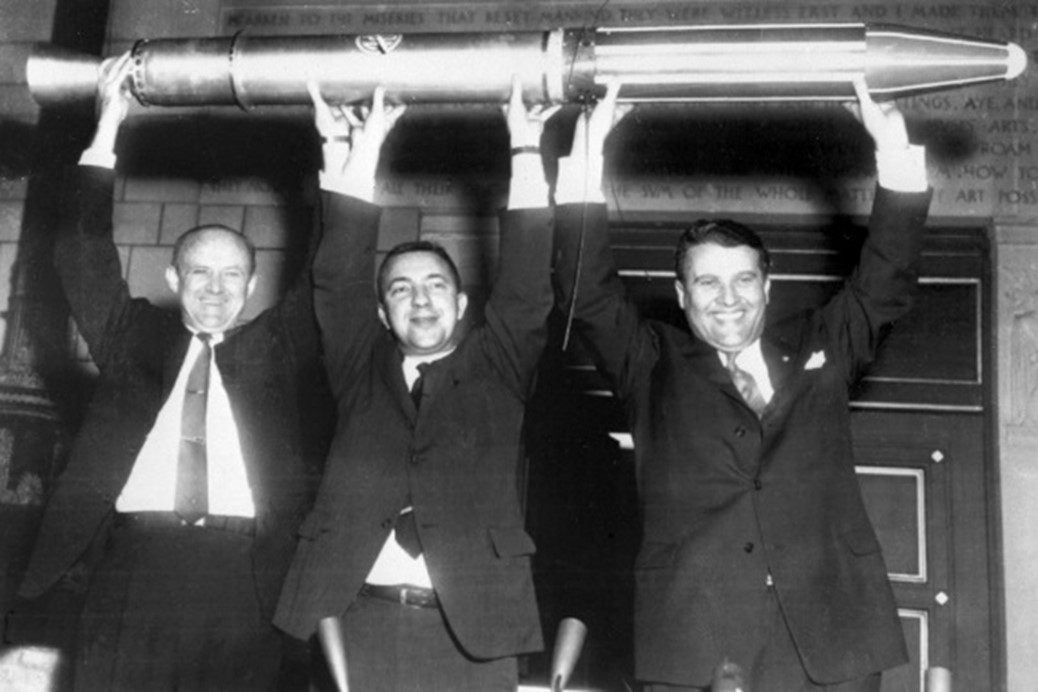
Bill Picketing, Jim Van Allen, Werner Von Braun
Photo 2
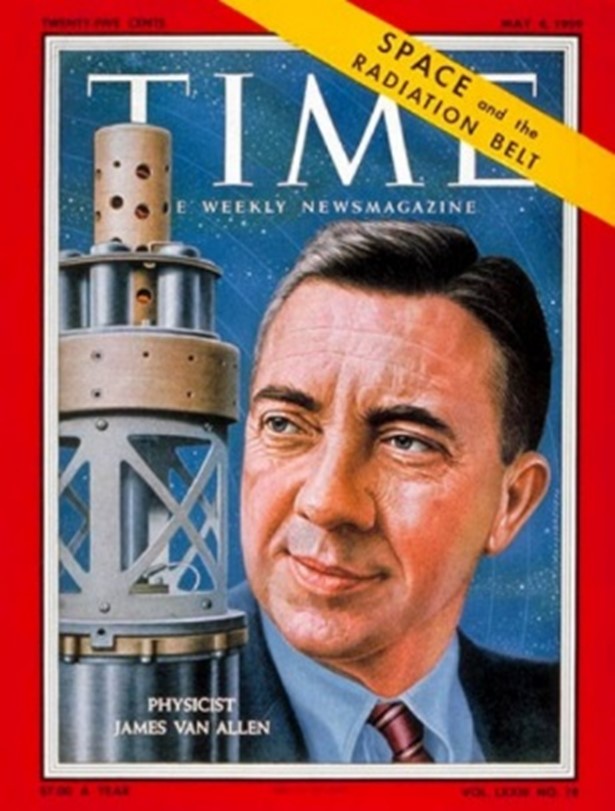
Photo 3
At the Cosmic Ray Lab, we had nine graduate students and nine satellites. Each graduate student had a satellite. I was appointed project manager of the Injun 1 satellite. We built two Injun satellites because every other rocket would blow up. Fortunately, our first launch was successful. We gathered all of our data in two passes to show that the aurora borealis is generated by charged particles from the sun. We achieved a perfect orbit, and Injun 1 will be in orbit for 900 years. After the first Injun 1 was successfully launched, the backup satellite was sent to NASA.
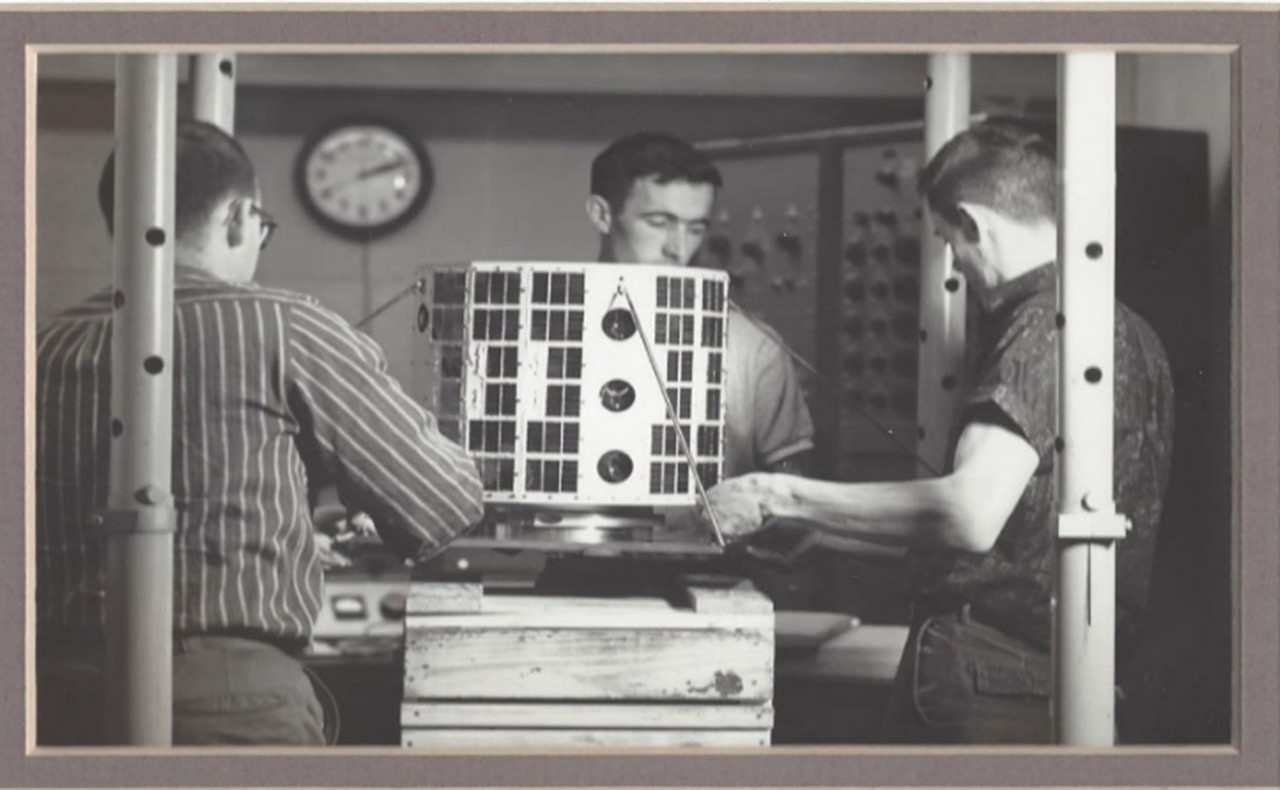
Curt Lauglin, Brian O’Brian, Bob Janda
Photo 4
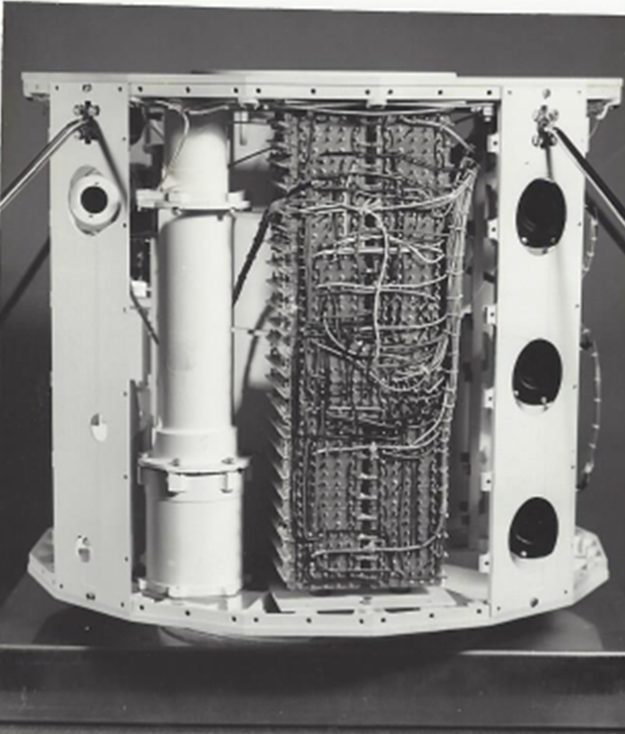
PHOTO 5
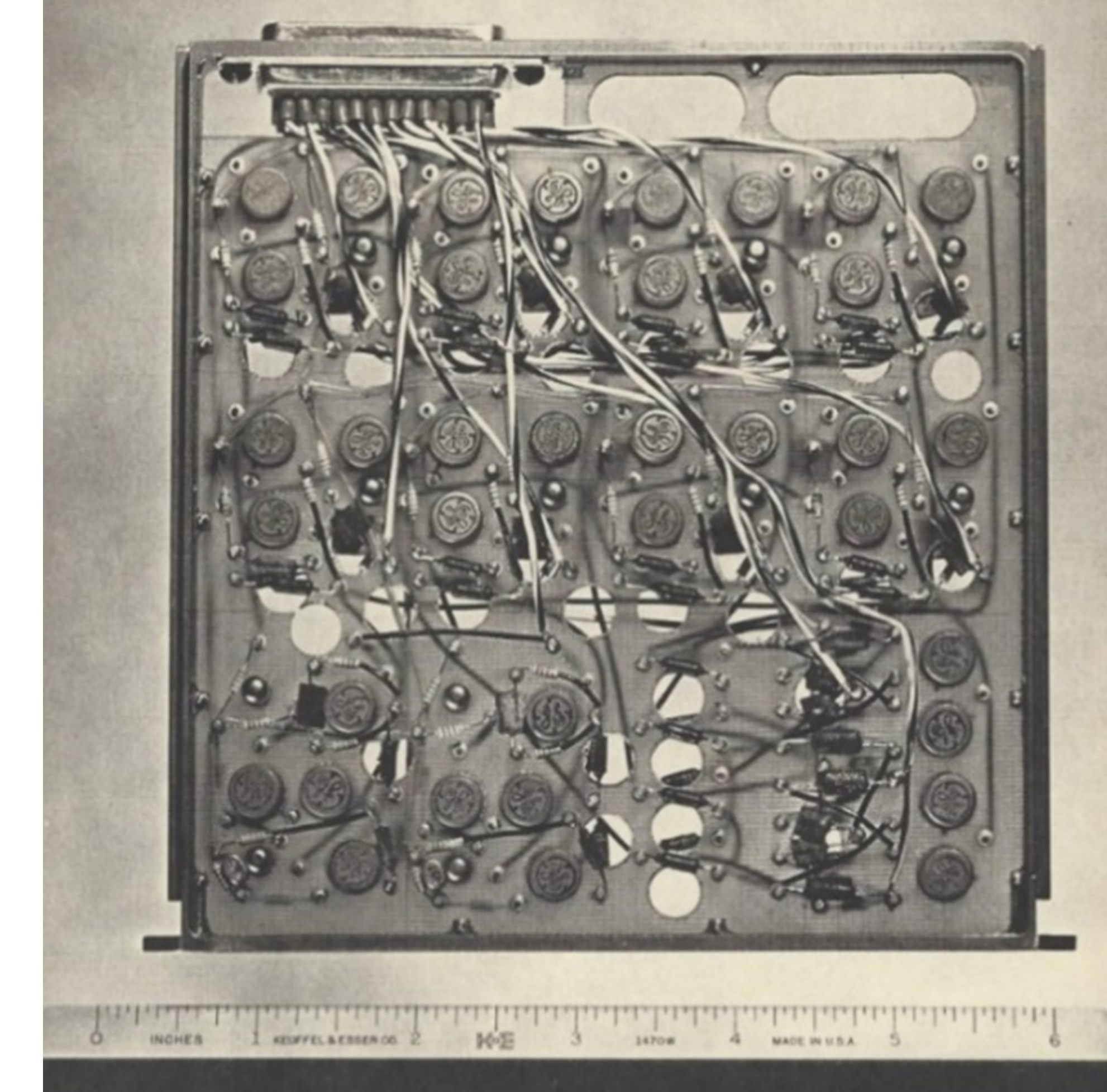
Photo 6
YOU COULD HEAR A PIN DROP
As a result, we used age-old American ingenuity. Being good old farm boys that were used to putting things together using bailing wire and tape, well, we couldn’t buy it so we built it. Using our grit, I went to the local TV shop and bought two Yagi TV antennas, like the ones in the photo. With my physics education, I calculated the lengths we needed to cut the elements, then cut the elements to the right wavelength to receive the satellite signal. Then I lashed the two antennas together at a 90-degree angle. I used two TV rotating mounts at a 90-degree angle from each other to move the antenna to track a satellite as it was going overhead. That was our tracking station and it worked well. This was good old farm boy’s ingenuity putting together a sophisticated UHF satellite tracking station using common sense, a couple of Yagi’s, some nuts and bolts, and a roll of electrical tape. This was how things got done. We forced success and lived up to the NASA motto “Failure is not an option.
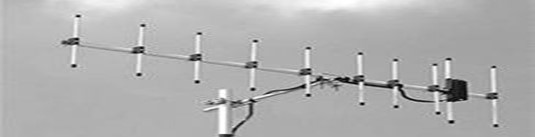
Photo 7
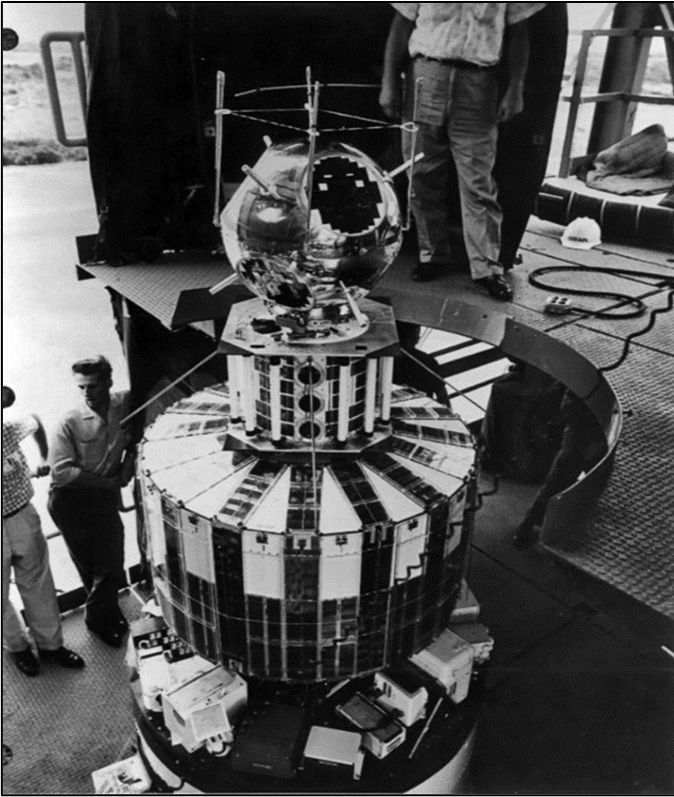
The following photos show how the satellites are stacked on the rocket. The first photo shows the inside of a launch pad with a satellite loaded on a rocket and the installation crew. The second photo shows an engineering diagram of the launch configuration. The third photo shows a photo of the shroud being installed around the satellite stack. The shroud is needed to protect the satellites as the rocket pushes the satellite up to 17,000 mph going through the atmosphere. The shroud is ejected after the rocket leaves the atmosphere and is in orbit. There is a spring between each satellite held there by a bolt with an explosive. The ground command sends a signal to the bolt, which explodes, allowing the spring to push the satellites away from each other.
Attached to the rocket.
PHOTO 8
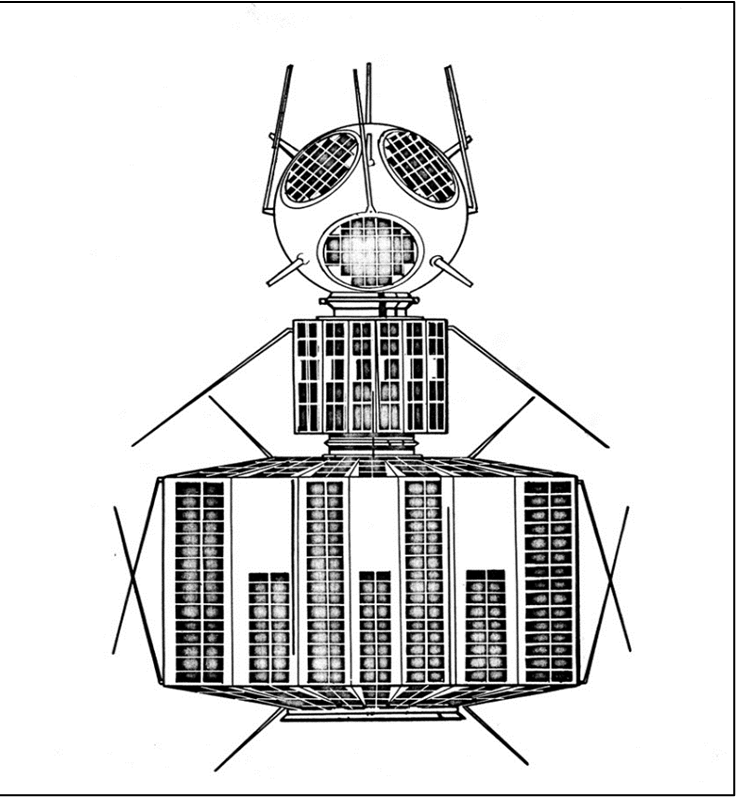
Bottom Transit 4A-Middle Injun 1-Top Greb
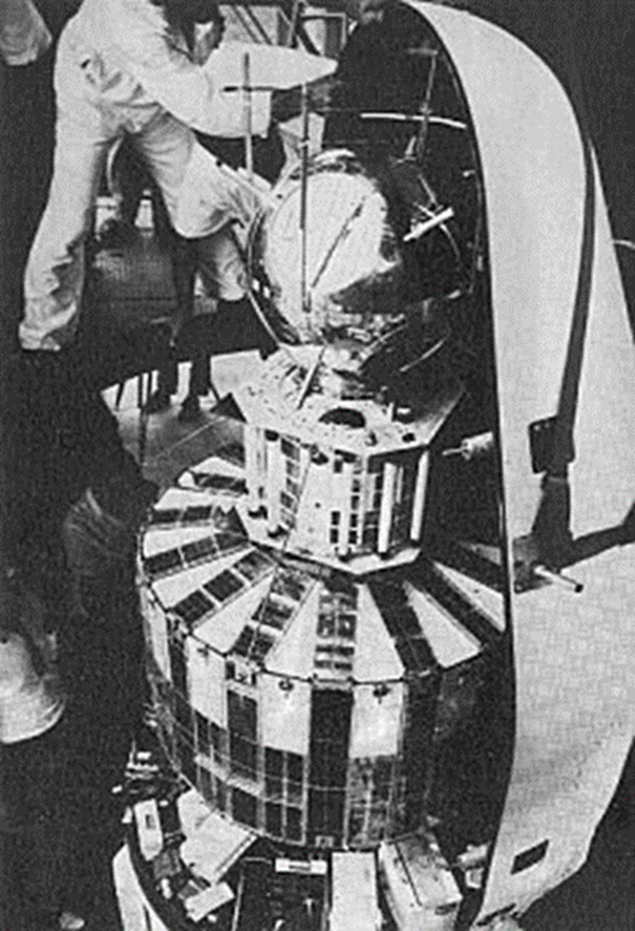
Shroud being installed for launch Rocket Thor-DM21 Able-Star
Launched June 29th, 1961 – 12:23 AM EDT
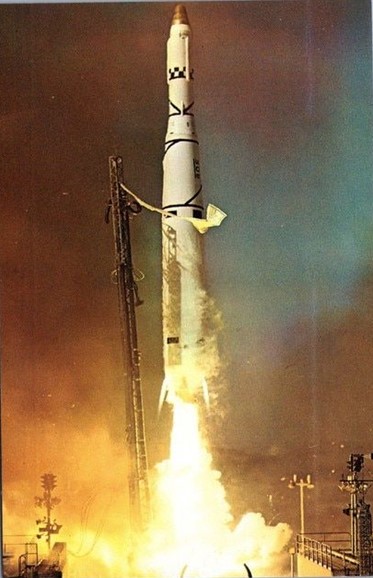
PHOTO 11
SERIOUS BUSINESS
SOLRAD-3
INJUN 1
TRANSIT 4A
Transit 4A was on the bottom and a military satellite with leading edge technology in 1961. This was a GPS (Global Positing Satellite) and was the last satellite to be put in orbit to complete the Navy Polaris program. In 1961 Admiral Rickover had taken a submarine cut it in half, stretched it and added launch platforms for 16 each UCM-27 inter-continental rockets with nuclear warheads. The Navy Transit program was 24 satellites was part of his program to give the any USA sub any in the world their precise located. The calculated location would be the launch coordinates for the nuclear tipped rockets and the trajectories for each rocket can be calculated from the launch location to each Russian target.
BEST DATE OF MY LIFE
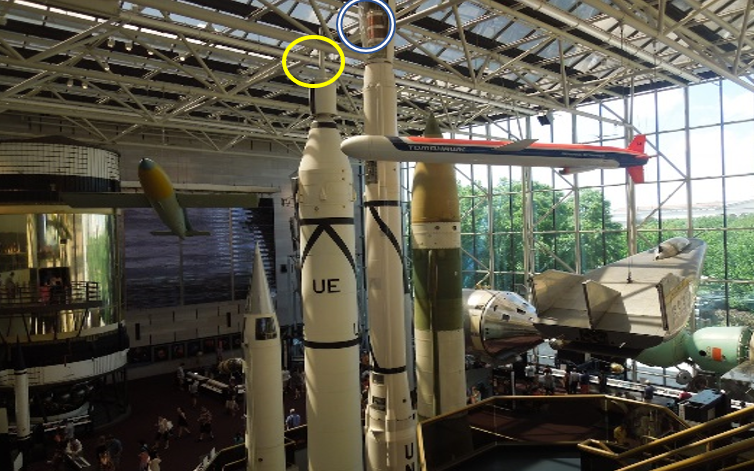
White circle surrounds Injun 1
Yellow circle surrounds Explorer 1
Two Iowa Birds Side by Side
PHOTO 12
Later, when I was at NASA-Goddard, von Braun asked me to go to the moon with him. He was a brilliant showman and motivator of men, like a Ringling Brothers and Barnum & Bailey Circus showman. Later, when Kennedy proposed the moon shot, and von Braun was in charge, he handpicked several space scientists, including myself, and invited us to Nashville for a meeting. He was outside the building greeting us as we arrived. He saw me and enthusiastically asked me to join his moon-shot team as he arched his arm and body as if he was throwing a baseball. I asked him what the plan was, and he said they didn’t have a plan yet – but WE are going. WOW.”
When I was at Goddard Spoace Fligth Ceneter my job was to calculte space radiation damage to the satellte powere system and to design radiation protection based upon mission life. I used a Gamma radioactive soure but need both an electron and an proton nuclear accelerator to do the damage accesment correctly.
On day the brach manager came to ,e and said Goddard is going to build a space radiation effect laboratory and they want me to head-up the project. I said “why me?” They said it was easier to have me work with a bulding acrchtect than to teach an archtect nucear radion prtion. They said plus I would pass the building test. I said what is that? They saod you walk in the front door go up the steps go to the restroom, go down the steps and out the door. I thought that and easy test and thought to myself that Weiner von bruan did not pass this test. Because when he desinged the Explorer 1 Block house he foget to put in a toilt so they had to add it OUTSIDE THE BLOCK HOUSE.
The project was successful. I designed the radiation protection and purchase both the proton and the electron accelerators. They are being used for space radiation damage calcutation ever since.
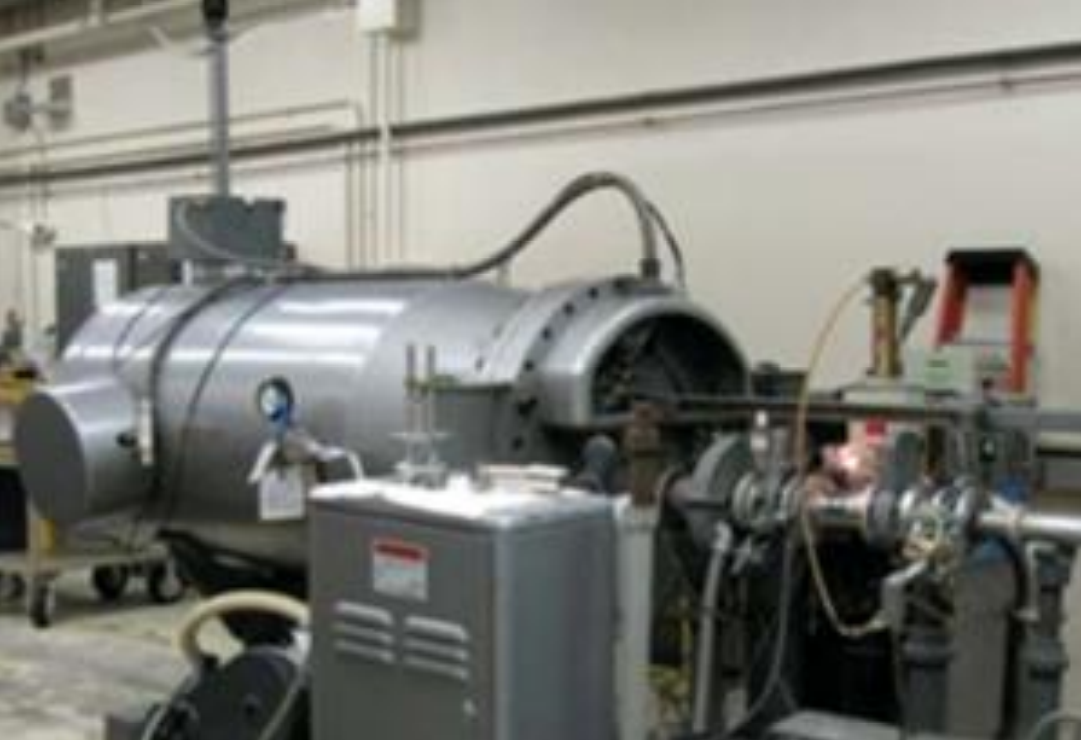
The Electron Nuclear Accelorator.
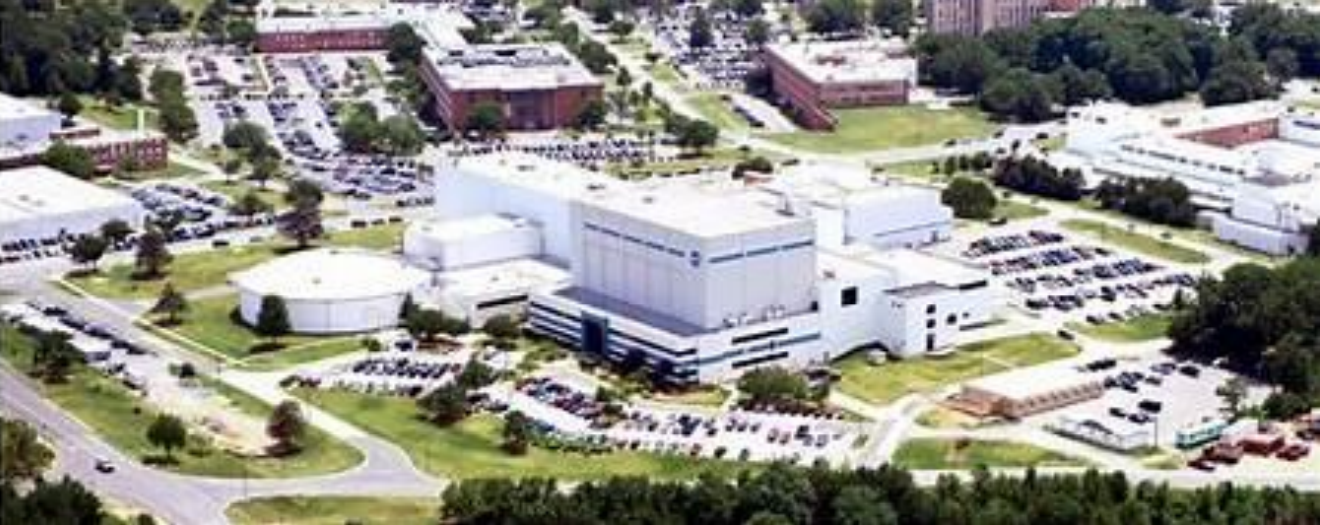
The Goddard Radiation Effects Laboratory.
This building housed ran the nuclear accelerators.
NASA BOOK
While working with NASA, I coauthored a “Handbook of Space-Radiation Effects on Solar cell power Supplies” NASA Book SP 3003. To my amazement the book became renowned and well respected even to today is still being used today 50 years later as a quick reference for projecting a satellite power system without having to use a computer.
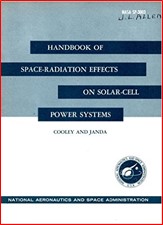
Still used today; they thought I was dead.
Photo 13
TRACK INJUN 1 TODAY
It is estimated that Injun 1 will be in orbit for 900 years. If you want to know where it is right now, go to n2yo.com and type in “INJUN 1”. The Earth map will appear, and you can look for the black satellite on the yellow track.
I was disappointed when Elon Musk said we were lucky to get to the moon and back.
I MUST SAY “ELON” IT WAS NOT DUMB LUCK
IT WAS HARD WORK BY SMART ENGINEERS AND SCIENTISTS THAT
“SWEAT THE DETAILS”.